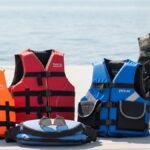

Yes, modern inflatable life jackets are safe when used correctly. They are trusted by boaters, fishermen, and professionals worldwide. However, like any safety device, their safety depends on proper understanding, maintenance, and use.
How Do Inflatable Life Jackets Work?
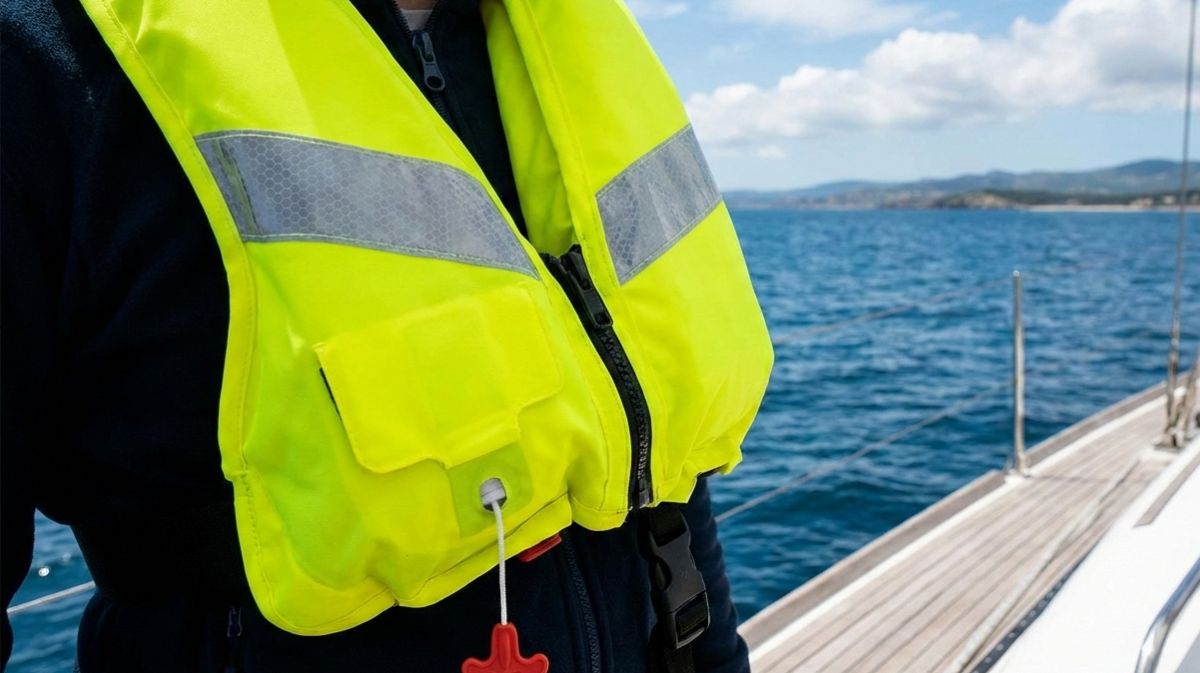
Unlike the bulky orange life jackets you might picture, inflatables are lightweight vests or belts worn in comfort. They stay flat until you need them. There are two main ways they inflate:
- Automatic Inflation: A small CO2 gas cartridge is triggered by getting wet. A dissolvable bobbin (a tiny pill) holds a spring-loaded pin. When it dissolves in water, the pin hits the cartridge, releasing gas to fill the bladder in seconds.
- Manual Inflation: You pull a toggle cord to trigger the gas cartridge. This is for situations where you might be in water but don’t want the jacket to inflate immediately (like crossing a shallow area).
Most automatic models also have a manual backup pull cord and a tube to blow air by mouth in case the cartridge fails.
Key Safety Advantages
- Comfort and Wearability: Because they are less bulky, people are more likely to actually wear them. A life jacket left under a seat is 0% effective.
- Excellent Buoyancy: When inflated, they provide strong upward force to keep your head above water, often turning an unconscious person face-up.
- Freedom of Movement: Ideal for activities like fishing, sailing, or cruising where you need to move easily.
Important Safety Considerations
Inflatables are safe, but they come with responsibilities that traditional life jackets do not.
- They Must Be Worn: A traditional foam jacket works even if not worn correctly. An uninflated vest provides almost no buoyancy.
- Regular Maintenance is Crucial: You must check them often.
- Check the Status Indicator: A green tab means it’s ready. A red tab means it needs re-arming.
- Check for Damage: Look for rips, mildew, or sun damage on the fabric and bladder.
- Check the CO2 Cartridge: Ensure it’s not corroded, punctured, or expired (they have a long shelf life but should be checked).
- Re-arming After Use: If the CO2 cartridge is fired (even by accident), it must be replaced, and the bobbin must be replaced with a new one. Kits are available.
- Not for Everyone: They are generally not approved for non-swimmers, small children, or for use in rough whitewater. For these situations, a traditional foam-filled Type I, II, or III jacket is the safer choice.
- Understand the Limits: Know if your model is for calm inland waters (Type III) or for offshore rough seas (Type I or II). The label will tell you.
Who Should Use One?
Inflatable life jackets are best for:
- Teens and adults who are confident swimmers.
- People on boats where falling overboard is a risk, but the water is not extremely cold or rough.
- Anyone who finds traditional jackets too uncomfortable to wear regularly.
Who Should Stick with Traditional Jackets?
- Non-swimmers and children.
- People in cold, rough, or fast-moving water.
- Anyone unable to understand or perform the required maintenance.
Final Verdict
Inflatable life jackets are a safe, effective, and modern life-saving tool. Their greatest strength—being so comfortable you forget you have it on—is also their potential weakness: you must remember to wear it and take care of it.
Think of it like an airbag in your car. It’s incredibly safe and reliable, but only if all the systems are connected and working. You wouldn’t drive without checking your airbag light. Don’t boat without checking your life jacket.
The safest life jacket is the one you will wear. For many responsible boaters, that is the inflatable.