
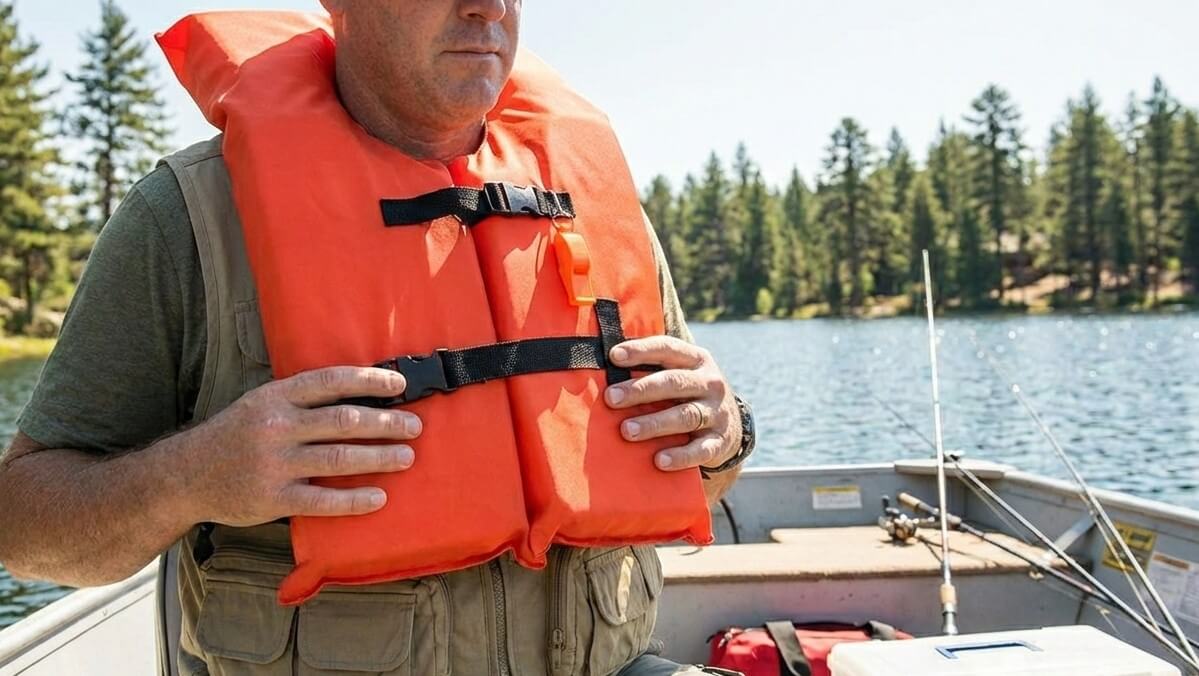
How to Wear a Life Jacket with a Fishing Vest
You’ve got your lucky hat, your favorite rod, and a tackle box full of hope. You’re standing at the water’s edge, ready for a great day of fishing. You slip on your trusty fishing vest, loaded with everything you need. Then, you reach for your life jacket. A moment of doubt hits. How are you supposed to wear both? Do you look like a walking tackle box? Will you be able to cast?
This is a common question for every beginner angler. Getting your life jacket fishing gear combination right is one of the most important things you can do. It’s not just about comfort—it’s about safety.
This guide will teach you exactly how to wear a life jacket with a fishing vest. We will break down why you need both, how to choose the right gear, and the step-by-step method for layering them perfectly. You’ll learn practical tips for all-day comfort and the common mistakes that can ruin your day. Let’s gear up correctly.
Why You Can’t Choose: Safety First, Organization Second
It’s crucial to understand that a fishing vest and a life jacket (officially called a Personal Flotation Device or PFD) have two completely different jobs. One is for convenience, the other is for saving your life.
- A Fishing Vest’s Job is Organization: It’s a mobile tackle box. Its many pockets hold your lures, line, tools, and snacks. It keeps everything within reach so you can focus on fishing.
- A Life Jacket’s Job is Safety: Its only job is to keep you afloat. If you fall in, get knocked unconscious, or become too exhausted to swim, a Coast Guard approved PFD is what will keep your head above water.
There is no situation where a fishing vest is a substitute for a life jacket. Safety regulations on boats and in many fishing tournaments require a PFD. Your angling safety equipment is not complete without it. The goal is to make them work together, not to choose between them.
Choosing the Right Gear for a Perfect Match
To wear these two items comfortably, you need to start with the right ones. Bulky gear will never layer well.
The Fishing Vest: Your Mobile Command Center
When you plan to wear a PFD, look for a fishing vest with a specific profile.
- Look for a Low-Profile Fit: Avoid big, boxy vests. A modern, slim-fit multi-pocket fishing vest made from lightweight nylon or mesh will sit closer to your body.
- Material Matters: A mesh fishing vest is an excellent choice for hot weather and for layering. It’s breathable and adds virtually no bulk. A ventilated fishing vest with mesh panels is also a great option.
- Pocket Placement is Key: Think about where your most-used pockets are. You’ll want to ensure your life jacket doesn’t cover them completely.
The Life Jacket (PFD): Your Most Important Tool
For most fishing situations, a specific type of PFD works best.
- Type III PFD for Anglers: This is your best bet. A Type III PFD angler is designed for flotation aid. It’s comfortable for all-day wear and allows for the range of motion needed for casting and reeling. Many fishing-specific PFDs have features like built-in rod holders or a D-ring for a net.
- Foam vs. Inflatable: You have two main choices:
- Foam PFDs: These are the classic vests. They are always “on” and require zero maintenance. They are the most reliable choice for a beginner. The downside is they can be bulkier.
- Inflatable Life Jacket Fishing: These are slim, lightweight belts or vests that inflate automatically or manually when you pull a cord. They are incredibly comfortable and are the best choice for avoiding bulk. However, they require regular maintenance (checking the CO2 cartridge, re-arming it after use) and are not recommended for non-swimmers or for high-impact sports.
For a beginner, a foam Type III PFD is the simplest and most reliable choice.
The Step-by-Step Guide: How to Wear a Life Jacket with a Fishing Vest
Okay, you have your slim fishing vest and your Type III PFD. Let’s put them together the right way.
Step 1: The Order of Operations (This Matters)
Always put your fishing vest on first, then your life jacket.
- Fishing Vest First: Put on your fishing vest and adjust its straps so it fits snugly and comfortably. Make sure everything you need is in its place.
- Life Jacket Second: Now, put your PFD on over the fishing vest. This is the only way to do it. Wearing a PFD under a vest restricts its movement, makes it impossible to adjust quickly, and can be very dangerous.
Step 2: Adjust the Life Jacket for a Secure Fit
This is the most critical step. A loose PFD is unsafe and uncomfortable.
- Start with the Waist/Side Straps: Fasten the straps around your waist or lower torso. Pull them snug. This anchors the bottom of the PFD and prevents it from riding up over your head.
- Adjust the Torso Straps: If your PFD has side straps, tighten them next. This pulls the front and back of the jacket together, eliminating any gap.
- Fine-Tune the Shoulder Straps: Finally, adjust the shoulder straps. These should not be carrying the main weight; they are just for getting a snug fit around your upper body.
The “Lift Test” for Anglers:
This is the best way to check if your PFD is secure. Have a friend grab the top of the shoulder straps and lift straight up. The PFD should not ride up past your chin or mouth. If it does, loosen the shoulder straps, tighten the waist/side straps, and try again.
Step 3: Test Your Mobility and Accessibility
Now, check if you can actually fish.
- The Casting Test: Make a few mock casting motions. Can you move your arms freely without the PFD digging into your armpits or chest?
- The Pocket Reach Test: Try to reach into your most-used fishing vest pockets. Can you get to your pliers, a small tackle box, or your line clippers? You may need to loosen the PFD’s shoulder straps just a fraction to get better pocket access, but never at the expense of the lift test. It’s a balance.
Practical Tips for All-Day Fishing Comfort
Once you have the basics down, these tips will elevate your experience on the water.
- Choose an Inflatable PFD for Minimal Bulk: If you fish in hot weather or hate the feeling of a foam vest, an inflatable life jacket is a game-changer. It provides the same Coast Guard approved level of safety with almost no bulk, giving you complete freedom of movement and perfect pocket access.
- Manage Your Straps: Once your PFD is adjusted, tuck any loose strap ends into loops or pockets. This prevents them from snagging on your fishing line, rod, or tree branches when you’re shore fishing.
- Balance the Load: Don’t overload one side of your fishing vest. A lopsided, heavy vest will be uncomfortable and can throw you off balance, especially in a boat. Distribute your tackle and tools evenly.
- Look for PFDs with Mesh Backs: If you do a lot of kayak fishing or sit on a boat bench, a PFD with a large mesh back is a must. It allows the chair’s backrest to sit comfortably against you without the PFD’s foam bunching up and pushing you forward.
Common Mistakes Every Angler Should Avoid
Learning what not to do is just as important. Avoid these common errors.
- Wearing the PFD Under the Vest: This is a major safety error. It can trap the PFD, prevent it from inflating (if it’s an inflatable), and make it impossible to adjust or remove in an emergency.
- Choosing a PFD That’s Too Big: A loose PFD is a false sense of security. In the water, it will slide right up over your head. Always use the manufacturer’s PFD sizing chart and do the lift test.
- Sacrificing Safety for Comfort: It’s tempting to loosen your PFD for more mobility, but if it fails the lift test, it’s not safe. Find a different PFD that fits your body shape better.
- Ignoring Inflatable PFD Maintenance: If you choose an inflatable, you MUST inspect it regularly. Check the CO2 cartridge, the status indicator, and manually inflate it from time to time to ensure the oral inflation tube works.
- Forgetting About Boat Fishing Requirements: Laws vary by state, but most require a PFD for every person on board. For children, they often need to be worn at all times. Know the rules for your area.
Frequently Asked Questions (FAQ)
Q1: Can I buy a fishing vest with built-in flotation?
Yes, these exist. However, they are often not as comfortable or as buoyant as a separate, high-quality PFD. They can also be bulky, and if the flotation part fails, you lose your PFD and your vest at the same time. Wearing a separate life jacket with a fishing vest is a more versatile and often safer system.
Q2: Do I really need a life jacket if I’m fishing from the shore?
Absolutely. You could slip on a slick rock, get swept away by a sudden current, or have a medical emergency that puts you in the water. A PFD is your insurance policy for the unexpected.
Q3: Will wearing a PFD over my vest make me too hot?
It can, especially on a hot summer day. This is where an inflatable PFD shines, as it offers minimal coverage. If you wear a foam PFD, look for models with plenty of ventilation and mesh panels. Staying hydrated and splashing water on yourself can also help.
Q4: How do I wear a life jacket if I’m using a fishing harness for big game fish?
Most fishing harnesses are designed to be worn over a low-profile PFD. The harness straps go around your torso and legs, and the PFD sits underneath. Look for a PFD that is specifically designed to be compatible with a harness.
Q5: What is the best PFD for kayak fishing?
For kayak fishing PFD, choose a shorter “Type III” jacket that won’t interfere with your seat back. A high-back design with mesh ventilation is ideal. This provides comfort while you sit and paddle and keeps you safe.
Conclusion: Your Comfort and Safety Are Linked
Knowing how to wear a life jacket with a fishing vest is a fundamental skill that separates a beginner from a prepared angler. It’s not about looking bulky; it’s about being smart.
Remember the core principles:
- The PFD always goes on the outside.
- A proper fit, verified by the lift test, is non-negotiable.
- Balance safety with mobility and pocket access for a system that truly works.
Before your next fishing trip, take five minutes at home. Put on your vest and PFD. Do the tests. Practice casting. Make sure your angler flotation device and your tackle vest life jacket combination feel like a single, comfortable unit. When you’re on the water, you can focus on what truly matters: the tug on the line. Stay safe and tight lines.