How to Secure Keys and Phone in a Life Jacket
Losing your keys or phone in the water is a boater’s nightmare. A simple wave can send your valuables sinking to the bottom of the lake.
The good news? You can keep your essentials safe while wearing a life jacket.
Let’s explore the best ways to secure your belongings without compromising safety or comfort.
Why This Matters
Water activities and electronics don’t mix well. But you need your phone for emergencies. You also need your car keys to get home.
Most life jackets don’t come with secure storage. Standard pockets often have simple openings that let items slip out.
One wrong move and your $1,000 phone is gone forever.
Best Methods to Secure Your Valuables
1. Use a Waterproof Pouch with a Lanyard
This is the most reliable method.
What you need:
- A waterproof phone pouch
- A neck lanyard or carabiner clip
How it works:
- Seal your phone and keys in the waterproof pouch
- Attach the lanyard around your neck
- Tuck the pouch inside your life jacket
The lanyard keeps everything attached to you. Even if the pouch comes loose, it won’t sink.
Pro tip: Choose a floating waterproof pouch. If it does fall out, it stays on the surface.
2. Attach Items to D-Rings
Many life jackets have D-rings or loops built in.
Steps to follow:
- Use a carabiner clip or zip tie
- Attach your keychain to the D-ring
- Double-check the connection before entering water
Important: Don’t overload D-rings. They’re designed for light items only.
For phones, use this method combined with a waterproof case.
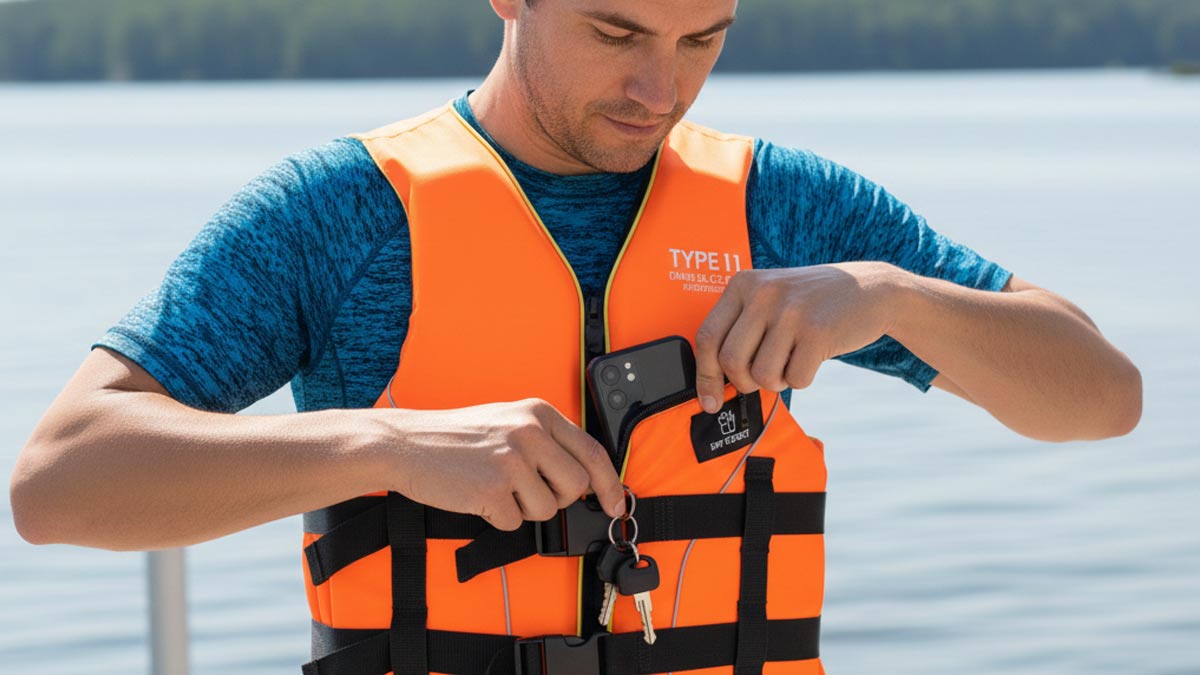
3. Choose a Life Jacket with Zippered Pockets
Some modern life jackets include secure storage compartments.
Look for these features:
- Waterproof zipper pockets
- Internal mesh pockets
- Velcro-sealed compartments
Best for: Fishing life jackets and paddling vests often have multiple pockets.
Limitation: Even zippered pockets aren’t 100% waterproof. Always use a protective case.
4. Wear a Dry Bag as a Cross-Body
For longer trips, consider a small dry bag.
How to use it:
- Get a 2-5 liter dry bag
- Wear it cross-body style under your life jacket
- Store phone, keys, and wallet inside
Advantage: Maximum protection from water.
Disadvantage: Adds bulk under your life jacket.
5. Use Retractable Key Holders
Retractable badge holders work great for keys.
Setup instructions:
- Clip the retractable holder to your life jacket
- Attach your keys to the retractable cord
- The spring mechanism keeps keys secure
When you need your keys, just pull. They retract automatically when released.
6. Try a Wrist or Arm Band
Waterproof armbands aren’t just for runners.
Benefits:
- Keeps phone accessible
- Doesn’t interfere with life jacket fit
- Easy to check notifications
Drawback: Can be uncomfortable during high-activity water sports.
What NOT to Do
Don’t Use Regular Pockets
Never put valuables in swimsuit or shorts pockets. They’ll fall out within minutes.
Don’t Rely on Zip-Lock Bags Alone
Plastic bags can tear easily. They’re not designed for water pressure.
Use them as a backup layer, not your primary protection.
Don’t Attach Heavy Items
Life jackets are safety devices first. Heavy items can affect buoyancy and comfort.
Keep attachments light and minimal.
Step-by-Step Security Checklist
Before you hit the water:
- Test your waterproofing – Submerge your pouch in a sink first
- Seal everything properly – Remove air from pouches completely
- Attach securely – Give items a firm tug to test connections
- Distribute weight evenly – Don’t overload one side of your life jacket
- Do a water test – Jump in shallow water to check if anything comes loose
Extra Tips for Maximum Security
Use Bright Colors
Visibility matters more than you might think.
When choosing waterproof pouches or cases, always pick bright, high-visibility colors. Neon yellow, orange, or lime green are your best options.
Here’s why this matters: Water can be murky. Even clear lakes have shadows and reflections that make objects hard to see.
If your phone pouch accidentally comes loose, a bright color makes it easy to spot floating on the surface. Black or dark blue pouches practically disappear in water.
The same principle applies to key floats and lanyards. Bright colors show up against both water and boat surfaces.
Reflective materials add another layer of visibility. Some waterproof pouches include reflective strips that catch sunlight.
Don’t worry about style. Function trumps fashion when you’re on the water. A neon pouch might not be Instagram-worthy, but it could save your $1,200 phone.
Remove Unnecessary Items
Less is always more when it comes to water activities.
Before leaving home, empty your wallet. Take only what you absolutely need for that specific trip.
You don’t need five credit cards on a kayaking trip. One ID and one payment card are plenty.
Leave your gym membership card, library card, and store loyalty cards at home. These can be replaced, but they’re not essential on the water.
Cash is risky to bring. It’s worthless if it gets soaked, and it’s hard to dry properly. If you must bring cash, keep it minimal.
Business cards, receipts, and photos should stay on shore. Your waterproof pouch has limited space—use it wisely.
Consider this: Every extra item you bring is one more thing to lose or damage. Simplify your load and reduce stress.
Have a Backup Plan
Hope for the best, but prepare for the worst.
Before you launch, tell someone reliable where you’ve hidden your spare car key. Your spouse, a friend, or a fellow boater should know the location.
Some people use magnetic key boxes attached under their vehicle. Just make sure it’s well-hidden and secure.
If you’re boating with others, consider leaving a spare car key with someone who’s staying on the boat. This works great for tubing or swimming.
For your phone, enable cloud backup before your trip. If the worst happens, at least your photos and contacts are safe.
Write down a few critical phone numbers on waterproof paper. Keep this in your boat’s glove box or tackle box.
Know your insurance coverage. Some policies cover water damage to electronics. Others don’t.
Check Regularly
Set a mental timer while you’re on the water.
Every 30 minutes, do a quick pocket check. Feel for your phone and keys. Make sure everything is still secure.
This habit takes five seconds but provides enormous peace of mind. It’s especially important during active water sports.
If you’re changing activities—switching from cruising to swimming, for example—always check your valuables first.
After any fall or splash, immediately verify that everything is still attached. Don’t wait until you’re back on shore.
Make checking part of your routine, like checking your life jacket straps. Consistency is key.
These simple habits become automatic after a few trips. Your future self will thank you.
Best Practices by Water Activity
For Kayaking/Canoeing
- Use a deck bag attached to your kayak
- Wear items in a chest-mounted dry pouch
- Choose a life jacket with multiple attachment points
For Swimming/Casual Boating
- Minimal is best – just phone in waterproof pouch
- Use a floating wrist strap
- Keep keys on the boat, not on you
For Fishing
- Get a fishing-specific life jacket with pockets
- Use retractable holders for frequently used items
- Consider a waterproof tackle pouch for essentials
For Water Sports (Tubing, Skiing)
- Leave phone on the boat
- Keys only – attached with carabiner to D-ring
- Minimize what you carry during high-impact activities
Common Mistakes to Avoid
Mistake #1: Thinking “I’ll be careful”
- Accidents happen. Always secure items properly.
Mistake #2: Overloading pockets
- Too much weight affects life jacket performance.
Mistake #3: Forgetting to close zippers
- Double-check all closures before entering water.
Mistake #4: Using old, worn-out pouches
- Replace waterproof pouches annually.
Mistake #5: Not testing before the trip
- Always test your security method in controlled conditions first.
When to Leave Items Behind
Sometimes the best solution is not carrying valuables at all.
Leave phone on boat if:
- You’re doing high-intensity water sports
- Multiple people are on the boat to watch belongings
- You’ll be in and out of the water frequently
Leave keys on boat if:
- Someone is staying with the boat
- You have a secure storage compartment
- You’re not the driver
Emergency Preparedness
Even with precautions, things can go wrong.
Before you go:
- Back up your phone data
- Write down important numbers on waterproof paper
- Take a photo of your car key (for locksmith reference)
- Enable phone tracking features
If you lose your phone:
- Use Find My Phone features from another device
- Contact your carrier immediately
- File a police report if needed
If you lose your keys:
- Have a spare key hidden on your vehicle (magnetic key box)
- Know a reliable locksmith’s number
- Consider AAA or roadside assistance membership
Final Thoughts
Securing keys and phones in a life jacket doesn’t have to be complicated.
The simplest method is often the best: waterproof pouch with a lanyard.
Invest in quality waterproof gear. A $20 pouch can save you hundreds in replacement costs.
Always prioritize safety over convenience. Your life jacket’s primary job is keeping you afloat.
Test your system before you need it. A calm lake close to shore is the perfect testing ground.
With these methods, you can enjoy water activities worry-free. Your valuables stay safe, and you stay focused on having fun.
Remember: The best security system is the one you’ll actually use consistently.
Stay safe on the water!