How To Choose A Life Jacket For Ocean Kayaking: Top Tips
Choose a life jacket for ocean kayaking that fits snugly, offers 16–22 lbs buoyancy, and allows full mobility.
I have spent years guiding sea kayak trips and testing gear. I know what works on swell, in wind, and during cold-water rescues. This guide shows you how to choose a life jacket for ocean kayaking with clear steps, real tips, and safety-first advice. Read on to pick a PFD that keeps you safe, comfortable, and able to paddle hard when conditions change.
Why the right life jacket for ocean kayaking matters
A life jacket for ocean kayaking is more than a flotation device. It protects you in waves, cold water, and during self- or assisted rescues. Ocean conditions can flip a kayak fast. A proper PFD helps keep your airway clear and your body positioned for rescue.
Wearing the right life jacket for ocean kayaking lowers drowning risk. It also gives you confidence to paddle farther and learn new skills. Rescue teams and guides expect paddlers to wear appropriate PFDs for sea trips. Choosing poorly can hinder swimming, reentry, or towing.
A good life jacket for ocean kayaking balances buoyancy, fit, and mobility. Later sections break down each factor so you can buy with confidence.
Key features to look for in a life jacket for ocean kayaking
Choose features that matter on open water. Focus on performance, not just looks.
- Buoyancy rating
- Look for 16–22 lbs of flotation for most adult ocean paddlers. This helps keep the head clear in rough water.
- Higher buoyancy may be needed for non-swimmers or heavy clothing.
- Fit and torso length
- The jacket must sit high on the chest and not ride up. Check torso length charts from the maker.
- A snug fit lets you move and braces you during a capsize.
- Type and cut
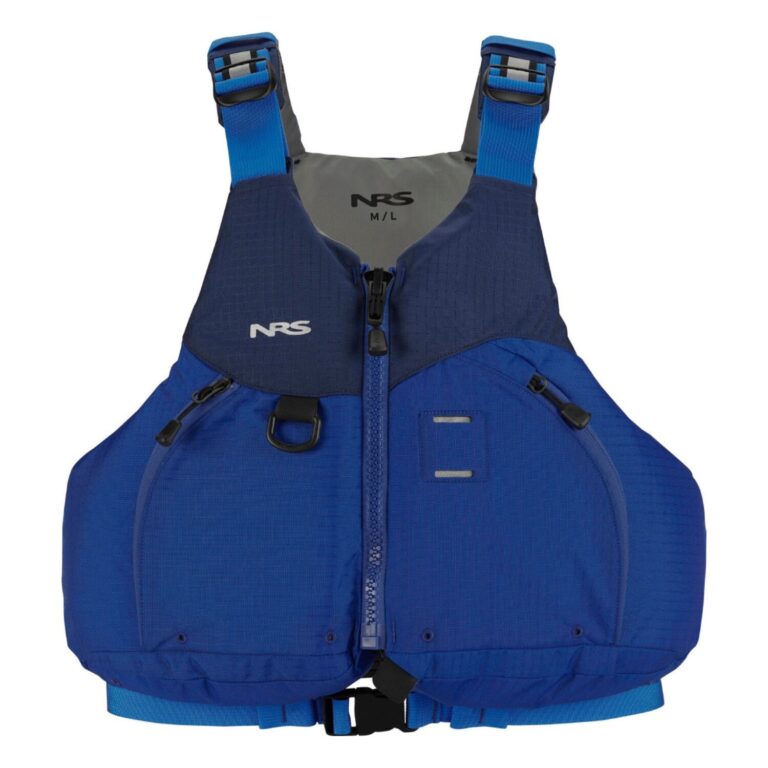
- Type III/PFDs designed for paddling are common. They allow stroke movement and close fit.
- Cutaway styles with good arm mobility work best for ocean strokes and bracing.
- Material and durability
- Heavy-duty nylon and reinforced seams resist abrasion from rocks and decks.
- Closed-cell foam holds buoyancy even if the outer shell tears.
- Harness and attachment points
- An integrated harness or heavy-duty tow loop helps during rescues and towing.
- Gear attachment points let you carry a pump, radio, or knife.
- Reboarding support
- Look for PFDs with a reentry handle or higher buoyancy around the back to aid self-rescue.
- Visibility and safety kit
- Bright colors, reflective tape, and a built-in whistle help rescuers spot you.
- Pockets that fit a strobe, VHF, or EPIRB are a plus.
- Comfort features
- Padded shoulders, adjustable waist straps, and ventilation prevent chafing.
- Low-profile designs reduce snagging on deck lines.
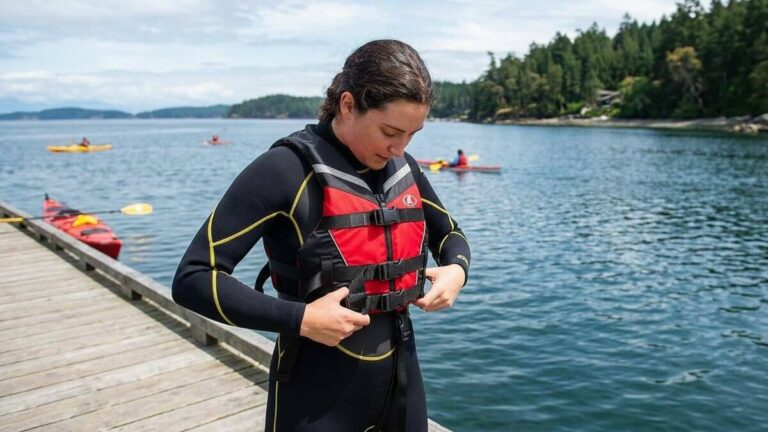
When you test a life jacket for ocean kayaking, wear your paddling layers and sit in a kayak. Check reach, twist, and overhead movement before buying.
How to choose buoyancy and safety ratings
Buoyancy matters most in cold, rough water. Use ratings as a baseline.
- Standard buoyancy classes
- 16–22 lbs is typical for ocean kayak paddlers who can swim.
- 22+ lbs helps non-swimmers or those who need help staying face-up.
- Safety certifications
- Look for PFDs that meet recognized safety standards. These ensure tested buoyancy and design.
- Consider your gear and clothing
- Heavy dry suits or thick layers raise your overall weight and change flotation needs.
- Add buoyancy if you wear very heavy clothing or carry lots of gear.
Test fit and feel in calm water when you can. A life jacket for ocean kayaking must support your head and let you get horizontal in the water.
Fit and sizing: step-by-step guide
A good fit is the most important factor. Follow these steps.
- Measure your torso
- Use a tape measure from the base of your neck to the top of your hip bone.
- Compare with manufacturer charts.
- Try it on with paddling clothes
- Wear what you will use on the water, like a dry top or fleece.
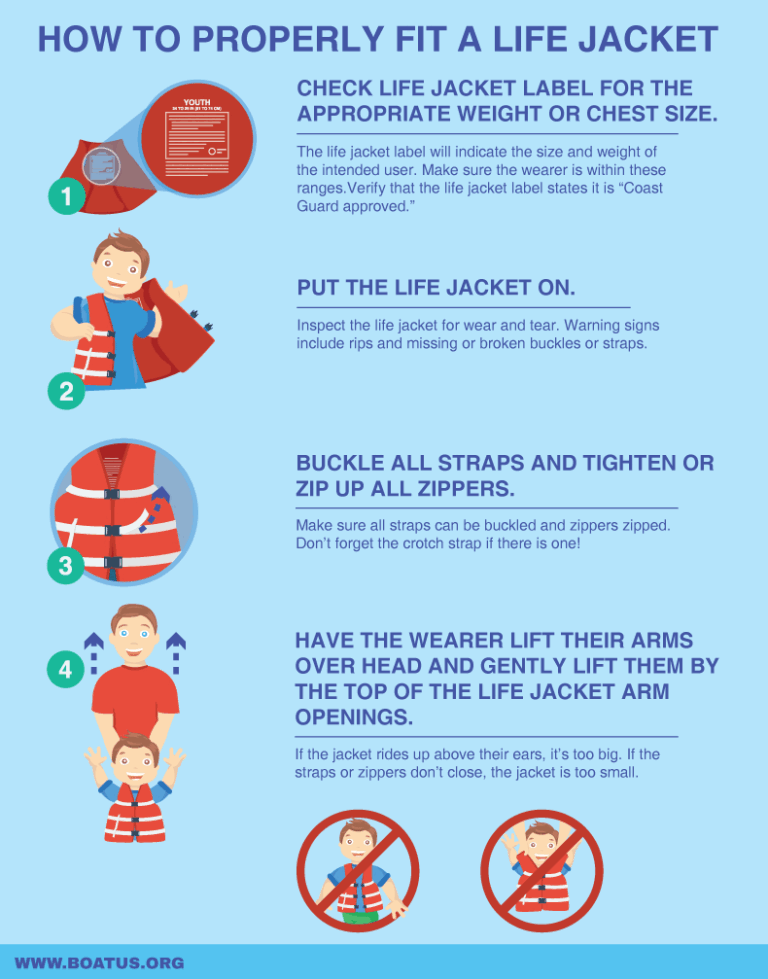
- Tighten straps securely
- Shoulder and waist straps should be snug but not painful.
- The PFD must not ride up over your chin when you lift your arms.
- Sit in a kayak and move
- Paddle, lean forward, and reach back. The jacket should not restrict stroke range.
- Test floatation in shallow water
- With a partner, float face up to check head support and comfort.
If unsure, size down for a snug fit rather than up for extra room. A loose life jacket for ocean kayaking is unsafe.
Matching a life jacket for ocean kayaking to your kayak and trip
Your kayak type and trip length change what you need.
- Day trips in calm seas
- A low-profile paddling PFD with 16–18 lbs buoyancy works well.
- Long coastal crossings and mixed conditions
- Choose higher buoyancy, more pockets, and better attachment points.
- Expedition trips with heavy gear
- Look for integrated harnesses, tow loops, and pockets for comms.
- Whitewater or surf zones
- A PFD with high mobility and durable shell helps with bracing and reentry.
- Cold-water paddling
- Prioritize flotation that keeps you face-up even with a dry suit and boots.
Think like a guide. Match the PFD to the worst conditions you expect. That keeps you safe when the sea turns.
Maintenance, inspection, and end-of-life signs
Look after your PFD. It repays with reliability.
- Regular inspection
- Check seams, buckles, and zippers before each trip.
- Squeeze foam in serviceable PFDs to feel for firmness.
- Cleaning and storage
- Rinse with fresh water after salt exposure.
- Dry in shade and store flat or hanging, away from heat and sunlight.
- Repairs and limitations
- Small tears can be repaired, but crushed foam or broken buckles often mean replacement.
- Replace PFDs after heavy UV exposure or if buoyancy feels reduced.
- Lifespan
- A well-kept PFD can last many years, but inspect it annually for wear.
If you ever doubt a life jacket for ocean kayaking, replace it. Trust is vital out on the sea.
Personal experience: lessons learned and common mistakes
I have capsized in coastal chop and helped others reenter. These are lessons that matter.
- Mistake: Buying by size only
- I once recommended a jacket that fit the chest but rode up during rescues. Always test torso length.
- Mistake: Choosing low buoyancy for comfort
- A paddler I guided nearly got pulled under by a cold-water shock. Higher buoyancy would have helped.
- Good practice: Practice swims and reentries
- We run pool drills before sea trips. Practicing with your PFD builds muscle memory.
- Tip: Use a leash for safety gear
- Taping a small rescue knife or strobe to the PFD kept it accessible in rough water.
- Tip: Swap jackets for conditions
- I keep two PFDs: a light one for calm, a higher-buoyancy one for open water.
These real moments show why fit, buoyancy, and practice matter. Treat your PFD as life insurance.
Buying checklist: quick steps to choose the right life jacket for ocean kayaking
Use this checklist before you buy.
- Measure your torso and chest while wearing paddling layers.
- Aim for 16–22 lbs buoyancy for most sea paddlers.
- Test mobility by simulating paddling and reentry.
- Check for a tow loop, pockets for safety gear, and reflective trim.
- Confirm safety certification and manufacturer specs.
- Inspect materials and closures for durability.
- Practice wearing the PFD in shallow water before sea use.
Keep this list when you shop online or in stores. A good PFD saves time and stress later.
PAA-style questions (People also ask)
What buoyancy should I choose for ocean kayaking?
- Choose 16–22 lbs for most adult ocean paddlers. Increase buoyancy if you wear heavy gear or cannot swim well.
Can I use a paddle sport PFD for ocean kayaking?
- Yes. Paddle-focused PFDs with a close fit and good arm mobility are ideal for ocean kayaking.
How should a life jacket fit when sitting in a kayak?
- It should sit high on your chest, allow free arm movement, and not ride up when you lean back or lift your arms.
Do I need a harness for ocean kayaking?
- A harness or strong tow loop is helpful for long trips and rescues. It is not essential for short, calm trips.
How often should I replace my PFD?
- Inspect it yearly. Replace if foam is soft, seams fail, or hardware breaks. Replace sooner after heavy UV or damage.
Frequently Asked Questions of How to Choose a Life Jacket for Ocean Kayaking?
What is the best buoyancy for a life jacket for ocean kayaking?
Most adult paddlers do well with 16–22 lbs of buoyancy. Higher buoyancy is safer for non-swimmers or when wearing heavy gear.
Can I use an inflatable PFD for ocean kayaking?
Inflatable PFDs can work if they are certified for kayaking and have the right buoyancy. Passive, foam-filled PFDs are more reliable if you may be unconscious.
How tight should my life jacket be for ocean kayaking?
Tight enough that it does not ride up when you lift your arms, but not so tight that it restricts breathing. Adjust straps to a snug, comfortable fit.
Are bright colors important for a life jacket for ocean kayaking?
Yes. Bright colors and reflective tape improve visibility to rescuers. Add strobes or whistles for extra safety.
Is a paddling-specific PFD better than a general-purpose one?
Yes. Paddling-specific PFDs offer better arm mobility and a fit designed for kayaking. They also include features like tow loops and gear pockets.
Should I practice rescues while wearing my PFD?
Yes. Practicing reentries and towing in calm conditions builds skill and confidence. It also shows you how your PFD performs in real use.
Conclusion
Choosing the right life jacket for ocean kayaking starts with fit, buoyancy, and the skills you bring to the sea. Test a PFD in a kayak, wear your paddling clothes, and choose features that match the trip and conditions. Keep it well maintained and practice rescue skills regularly. Take action today: measure your torso, try PFDs in person, and enroll in a sea-safety clinic to practice. Share your experiences, ask questions, or subscribe for more sea-safety tips.