How To Check Buoyancy Rating On A Life Jacket?: Safety Tips
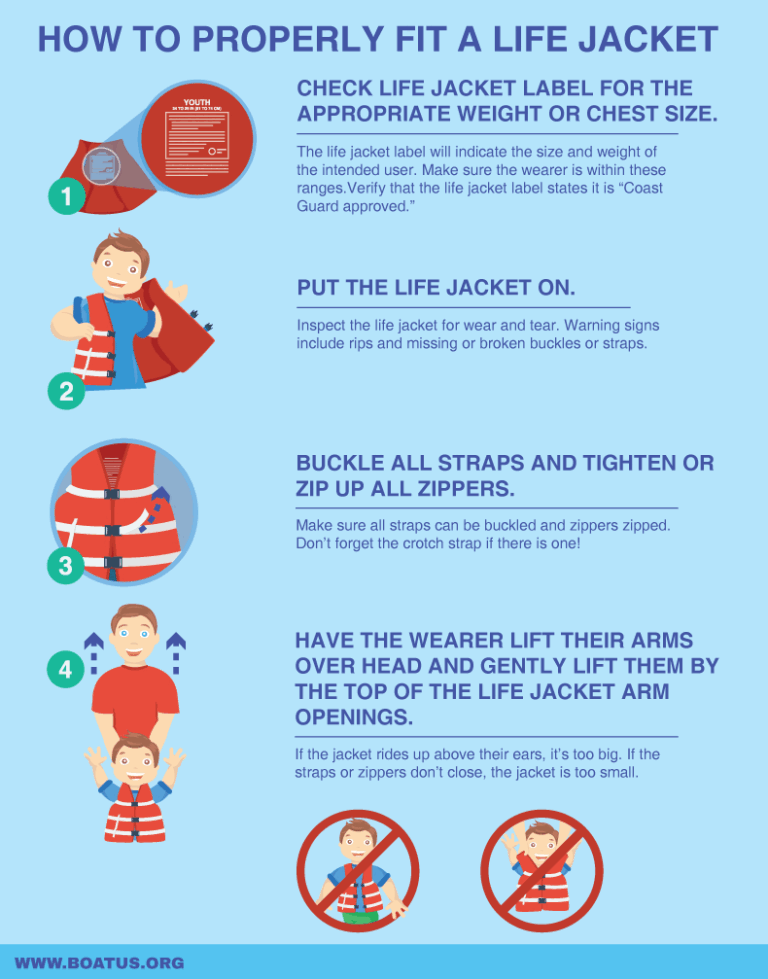
Look for the labeled buoyancy number (in Newtons or pounds) on the jacket's tag or label.
I have worked with boating safety gear for years and tested many life jackets. This guide shows exactly how to check buoyancy rating on a life jacket? in clear, simple steps. You will learn where the rating is, what the numbers mean, how to test a jacket safely, and tips to pick the right PFD for your activity. Read on for practical checks, real‑world tips, and easy rules to follow before you get on the water.
Why buoyancy rating matters
Buoyancy keeps you afloat. A life jacket's buoyancy rating tells you how much upward force the jacket gives. Choosing the right rating helps you stay safe in cold water, rough seas, or if you are unconscious. Knowing how to check buoyancy rating on a life jacket? gives you confidence before every trip.
Where to find the buoyancy rating
Most life jackets have a sewn-in label or printed tag. Look inside the collar, on the back near the neckline, or on a side seam. The tag will show a number in Newtons (N) or pounds (lb) and may list the PFD type and standard it meets. If the tag is missing or unreadable, do not rely on the jacket.
How to Check Buoyancy Rating on a Life Jacket?
Follow these simple steps to confirm the rating and fit.
-
Inspect the label
-
Find the sewn-in tag.
-
Read the number in Newtons (for example, 150 N) or pounds (for example, 33 lb).
-
Note the PFD type: Type I, II, III, IV, or V.
-
Match the rating to the use
-
For offshore and rough water, look for higher ratings (150 N and up).
-
For calm waters or sports, lower ratings might be OK if the jacket fits well.
-
Check the standard and certification
-
Look for approval marks from national safety bodies.
-
Confirm the jacket meets current standards for your region.
-
Confirm physical condition
-
Ensure no rips, heavy compression, or missing foam.
-
If the jacket looks worn, the rating may no longer apply even if the tag is present.
Knowing how to check buoyancy rating on a life jacket? starts here: find the label, read the number, and match it to your activity.
Interpreting numbers and types
Buoyancy numbers tell you how much lift the jacket offers. Higher Newtons mean more lift. Common picks:
- 50 N to 100 N
- Good for water sports where you are conscious and near help.
- 100 N to 150 N
- Suited for coastal and sheltered water activities.
- 150 N and above
- Best for offshore or cold water and for unconscious recovery.
PFD types also matter. Type I is for offshore rescue. Type II and III are for near‑shore and sports. Type V includes special uses like sailing or kayaking. Always use the right type and rating for your conditions.
How to test buoyancy at home safely
You cannot measure exact Newtons at home, but you can check basic performance.
-
Float test in shallow, calm water
-
Wear the jacket as directed.
-
Enter waist‑deep water with a buddy present.
-
Relax and let the jacket support you. If you can float with mouth and nose well above water, the jacket is doing its job.
-
Tilt and roll check
-
Gently roll onto your back and let your head fall back.
-
A life jacket rated for offshore use should turn an unconscious person to a safe face‑up position.
-
Inspect buoyant material
-
Squeeze the foam. It should spring back.
-
Water-logged or compressed foam may mean the jacket no longer gives full buoyancy.
Always test with a helper and in a safe area. If the jacket fails these checks, retire it.
Common mistakes and how to avoid them
Simple errors reduce safety. Avoid these pitfalls.
- Relying only on age
- Older jackets can still be fine, but inspect tags and material.
- Wearing a loose or oversized jacket
- A loose jacket can slip off. Fit matters more than style.
- Ignoring the PFD type
- Using a low‑profile vest for offshore trips is risky.
- Assuming automatic inflatables are always better
- Inflatable jackets need maintenance and regular inspections.
Learn how to check buoyancy rating on a life jacket? and then pair that with proper fit and upkeep to stay safe.
Regulations, standards, and labeling to watch for
Safety standards vary by country. Look for compliance marks and current standards on the tag. Labels often include:
- Buoyancy value in Newtons or pounds
- Standard or approval code
- Manufacturer and model
- PFD type and intended use
If a label shows an old or unclear standard, confirm with the manufacturer or choose a jacket with up‑to‑date certification.
Personal experience and practical tips
I once tested three jackets side by side for a small boat review. The labels matched, but one older jacket had compressed foam and failed the float check. Lesson learned: a clear buoyancy label is only the start. I now always:
- Inspect tags and foam before buying
- Try the jacket in water with someone watching
- Favor jackets with visible, recent certification
When teaching new boaters, I show how to check buoyancy rating on a life jacket? then demonstrate a safe float test. That hands‑on step builds trust and saves lives.
PAA-style search questions (common quick answers)
Q: How can I tell if a life jacket is rated for offshore use?
A: Look for a buoyancy rating of 150 N or higher and a Type I label. Check for certification on the tag.
Q: Is a 50 N jacket enough for swimming?
A: A 50 N jacket may help in calm, supervised water but is not for offshore or cold conditions.
Q: Can an inflatable life jacket replace foam?
A: Inflatables can match buoyancy but need regular checks and correct inflation to be safe.
Q: How often should I replace a life jacket?
A: Replace when foam is compressed, labels are unreadable, or the jacket fails float checks; there is no fixed date.
Q: Does fit affect buoyancy?
A: Yes, a poorly fitting jacket can slip off or move the buoyancy away from your body, reducing effectiveness.
Frequently Asked Questions of How to Check Buoyancy Rating on a Life Jacket?
What does 150 N mean on a life jacket?
150 N means the jacket provides about 150 Newtons of upward force. It is a common offshore standard and offers strong flotation for rough water.
Where is the buoyancy rating located?
The rating is typically on a sewn-in label or tag near the collar or inside seam. Look for numbers in Newtons or pounds.
Can I rely on a jacket with a faded tag?
No. If the tag is faded or missing, you cannot confirm the rating. Replace the jacket or contact the maker for guidance.
How do I convert pounds to Newtons?
Multiply pounds by 4.448 to get Newtons. Many labels show both units for easy comparison.
Are all life jackets tested the same way?
Standards vary by country but most require lab tests for buoyancy and turning ability. Check the approval code on the label to confirm the standard used.
Conclusion
Checking buoyancy is simple if you know where to look and what to test. Read the tag, check the number and type, do a safe float test, and inspect the material. Practice these steps before every trip and replace any jacket with worn foam or unreadable labels. Take action now: check your life jackets, test them in safe water, and share this guide with anyone who heads out on the water. Leave a comment with your questions or experiences so others can learn too.