How to Wear a Life Jacket Over a Wetsuit
The sun is shining. The water looks perfect. You’ve got your new board or kayak ready, and you’re pulling on your gear. But then you stop and look at your wetsuit and your life jacket. A simple question pops into your head: “How do I wear these two things together?”
It’s a great question. Getting this combination right is one of the most important things you can do for your safety and comfort in the water. Wear them wrong, and you could be uncomfortable, restricted, or even in danger.
This guide will teach you everything you need to know. We will cover why you need both, how to choose the right gear, and the exact step-by-step process for how to wear a life jacket over a wetsuit. You’ll learn practical tips for comfort and the common mistakes to avoid. Let’s get you ready for a safe and fun day on the water.
Why Wear a Life Jacket Over a Wetsuit Anyway?
First, let’s be clear about something very important: a wetsuit and a life jacket (also called a PFD, or Personal Flotation Device) have two completely different jobs. They are not interchangeable.
- A Wetsuit’s Job is Warmth: A wetsuit is made of neoprene, a type of rubbery foam. It works by trapping a thin layer of water between the suit and your skin. Your body heat warms this water, which then keeps you warm. It does not provide reliable flotation.
- A Life Jacket’s Job is Flotation: A PFD is designed with foam or inflatable chambers to keep your head above water if you become unconscious or are too tired to swim. It is a piece of life-saving rescue equipment.
Think of it like this: a wetsuit is your winter coat, and a life jacket is your seatbelt. In cold water, you need both to survive. The coat keeps you from getting hypothermia, and the seatbelt saves you in an emergency. Layering your life vest over a wetsuit is the standard for safety in almost all water sports, from kayaking to stand up paddleboarding.
Choosing the Right Gear for the Job
Before we talk about wearing them, you need to have the right gear. A bad fit with either piece will make the combination uncomfortable and unsafe.
Understanding Your Wetsuit
Your wetsuit is the base layer. Its fit is crucial.
- Material: It’s made of neoprene wetsuit material.
- Thickness: Wetsuits come in different thicknesses, measured in millimeters (like 3/2mm or 4/3mm). Thicker suits are for colder water. The thickness doesn’t change how you wear a PFD over it, but it’s good to know.
- Fit: Your wetsuit must be snug. It should feel like a second skin. A loose wetsuit will let too much cold water in and will bunch up uncomfortably under a life jacket. Whether you have a chest zip wetsuit or a back zip, make sure it fits properly before you even think about the PFD.
Selecting the Best Life Jacket (PFD)
Not all life jackets are the same. For most water sports where you wear a wetsuit, you’ll want a specific type.
- Type III Life Jacket: This is the most common choice. It’s called a “flotation aid.” It’s designed for activities where you expect to be in the water, like kayaking, wakeboarding, or paddleboarding. It offers good mobility water sports enthusiasts need.
- Coast Guard Approved PFD: Always look for this stamp. It means the PFD has been tested and meets strict safety standards. Some impact vests used for wakeboarding look like life jackets but are not always Coast Guard approved PFDs. Check the label! An impact vest protects you from hitting the water, but a PFD is designed to keep you afloat. For general safety, you need a PFD.
- Fit: This is the most important part. A PFD that is too big will ride up over your head in the water. A PFD that is too small will not provide enough flotation. We will cover PFD sizing in detail next.
The Step-by-Step Guide: How to Wear a Life Jacket Over a Wetsuit
Okay, you have your snug wetsuit on and the right Type III PFD in hand. Here’s how to put them together perfectly.
Step 1: Put On Your Wetsuit Correctly
Make sure your wetsuit is pulled up fully on your shoulders and pulled down smoothly over your legs. There should be no major air pockets or bunches of neoprene. Run your hands along your arms and torso to smooth it out. A smooth base layer is key.
Step 2: Put On the Life Jacket
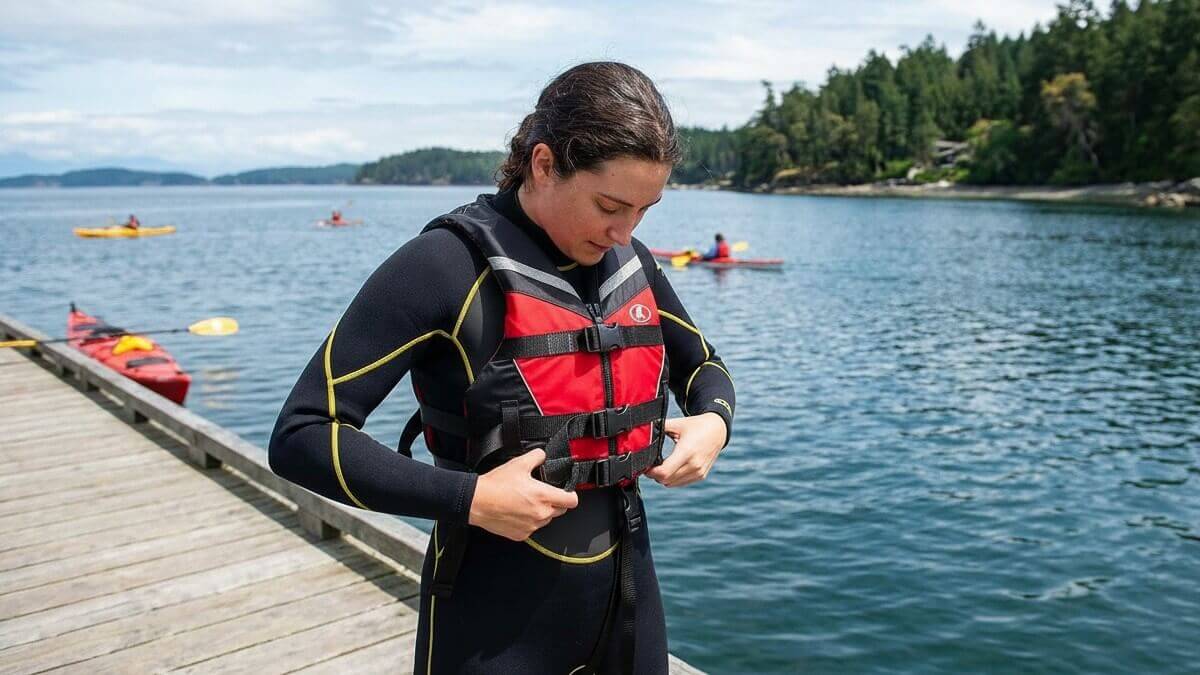
With your wetsuit on, simply slip the life jacket over your head or put your arms through the armholes, depending on the style.
Step 3: Adjust for a Perfect Fit (This is the Most Important Step)
This is where most people go wrong. You can’t just zip it up and go. You need to adjust the straps to make the PFD and wetsuit work as one unit.
- Start at the Waist: Most PFDs have one or two straps on the sides at your waist. Fasten these first. They should be snug but not so tight that you can’t breathe comfortably. This secures the bottom of the jacket so it can’t ride up.
- Move to the Side Straps: Next, adjust any straps on the sides of your torso. These pull the jacket closer to your body, eliminating any gaps between the PFD and your wetsuit.
- Finish with the Shoulder Straps: Finally, adjust the shoulder straps. These are for fine-tuning the fit, not for holding the whole jacket up.
The “Lift Test” for a Secure Flotation Device:
This is the best way to check your fit. Have a friend gently grab the top of the shoulder straps and lift up. The PFD should not ride up and go past your chin or ears. If it does, it’s too loose. Tighten the waist and side straps and try again.
The “Mobility Test”:
Now, test your range of motion. Move your arms in big circles. Bend forward at the waist. Twist from side to side. The jacket should move with you without digging into your armpits or restricting your breathing. If it feels restrictive, it might be too small or too tight.
Practical Tips for Maximum Comfort and Mobility
Even with a perfect fit, you can make the buoyancy aid wetsuit combination even more comfortable.
- The Smooth-Down Technique: Before you fully tighten all the straps, use your hands to smooth out the wetsuit material under the PFD, especially around your back and under your arms. This prevents small wrinkles that can cause chafing.
- Chafing Prevention is Key: The neoprene of a wetsuit and the nylon of a PFD can rub your skin raw. To prevent this:
- Wear a thin, form-fitting rash guard under your wetsuit. This adds a silky layer that prevents almost all chafing.
- Apply an anti-chafe balm (like Body Glide) to your neck, underarms, and any other spots where you feel rubbing.
- Look for PFDs with soft, rolled edges on the armholes and neck.
- Consider the Zipper: A chest zip wetsuit often has a smoother upper back and chest area than a back zip, which can be more comfortable under a PFD.
Common Mistakes to Avoid
Learning what not to do is just as important. Here are the most common mistakes beginners make when layering life jacket wetsuit gear.
- Choosing a PFD That’s Too Big: This is the most dangerous mistake. A loose PFD will not keep you safe. Always use the manufacturer’s size chart and do the lift test.
- The PFD is Too Tight: If you can’t take a full, deep breath, your jacket is too tight. This can be dangerous and will ruin your day.
- Leaving All the Straps Loose: Don’t just zip it up and think you’re done. Loose straps allow the jacket to shift and ride up, which is uncomfortable and unsafe.
- Assuming Wetsuit Buoyancy is Enough: A wetsuit gives you a little bit of flotation, but you cannot rely on it, especially if you are tired or in rough water. Always wear your Coast Guard approved PFD.
- Not Doing a “Test Fit” at Home: Don’t wait until you’re at the boat ramp to figure this out. Put your gear on at home. Walk around. Do the tests. Make sure it’s comfortable and correct before you leave.
Frequently Asked Questions (FAQ)
Q1: Does a wetsuit provide enough flotation on its own?
No. A wetsuit provides a very small amount of swimming wetsuit buoyancy because neoprene is a foam. However, it is not designed or certified as a lifesaving device. You should always wear a PFD for safety.
Q2: Can I just wear an impact vest instead of a life jacket?
It depends on the activity and local laws. For sports like wakeboarding, an impact vest is designed to protect your torso from hitting the water at high speed. However, many are not Coast Guard approved PFDs. For general boating, kayaking, or paddleboarding, you need a proper PFD. Always check the label.
Q3: How tight should a life jacket be over a wetsuit?
It should be snug. Think of a firm hug, not a squeeze. You should be able to breathe deeply and move your arms freely without the jacket shifting around. The goal is a secure flotation device that feels like a part of you.
Q4: Will wearing a PFD over a wetsuit make me too hot?
It can, especially on a hot, sunny day. However, safety is the top priority. You can look for PFDs with more breathable mesh liners or lighter materials. You can also splash water on yourself to cool down. The risk of overheating is less than the risk of drowning without a PFD.
Q5: Do I need a special life jacket for different sports like kayaking or surfing?
Yes. A kayaking wetsuit safety setup might use a PFD with more pockets and a shorter cut for better seating. A surfing life jacket or wakeboarding gear setup might use a more streamlined, low-profile PFD or an impact vest to allow for maximum arm movement. Choose a PFD designed for your primary activity.
Conclusion: Your Safety is Your Responsibility
Knowing how to wear a life jacket over a wetsuit is a fundamental skill for anyone who enjoys water sports. It’s not complicated, but it requires attention to detail.
Remember the key takeaways:
- A wetsuit is for warmth, and a PFD is for flotation. You need both.
- Proper fit is non-negotiable for both pieces of gear.
- Always adjust the PFD straps and perform the lift test.
- Practice at home to ensure comfort and safety before you hit the water.
Your water safety equipment is only as good as your ability to use it correctly. Take five minutes before your next adventure to practice your flotation over neoprene setup. Your comfort, your confidence, and your life are worth it. Now go out there and have a fantastic, safe time on the water.